- Santrel Media
- Posts
- Amazon Debuts AI ‘Canvas’ for Sellers 🤖
Amazon Debuts AI ‘Canvas’ for Sellers 🤖
Plus: OpenAI stops Instant Checkout inside ChatGPT 🛒, while Meta tests AI shopping research chatbot 💻.

Want to start selling online? Get started with Shopify for just $1.
Imagine being able to chat with your business data to gain insights on how to spend on your next campaign 😮💨?
Hi there, and welcome to another issue of The Ecom Press 🗞️!
This week, Amazon is giving sellers a new AI canvas that turns dashboards into an interactive workspace you can chat with 🧠. Also, OpenAI is taking a detour on Instant Checkout, shifting purchases away from ChatGPT and back into connected retailer apps 🛒. And Meta is quietly testing shopping research inside Meta AI 🔍.
Plenty to unpack. Let’s get into it 👇
In a rush? Here's the juice🤭:
🤖 Amazon debuts AI ‘canvas’ that lets sellers chat with their data.
🛒 OpenAI stops Instant Checkout inside ChatGPT.
💻 Meta tests AI shopping research chatbot.
🚀 Ecom strategies: Five practical ways to use AI beyond chatting
⚡️Worthy Mentions
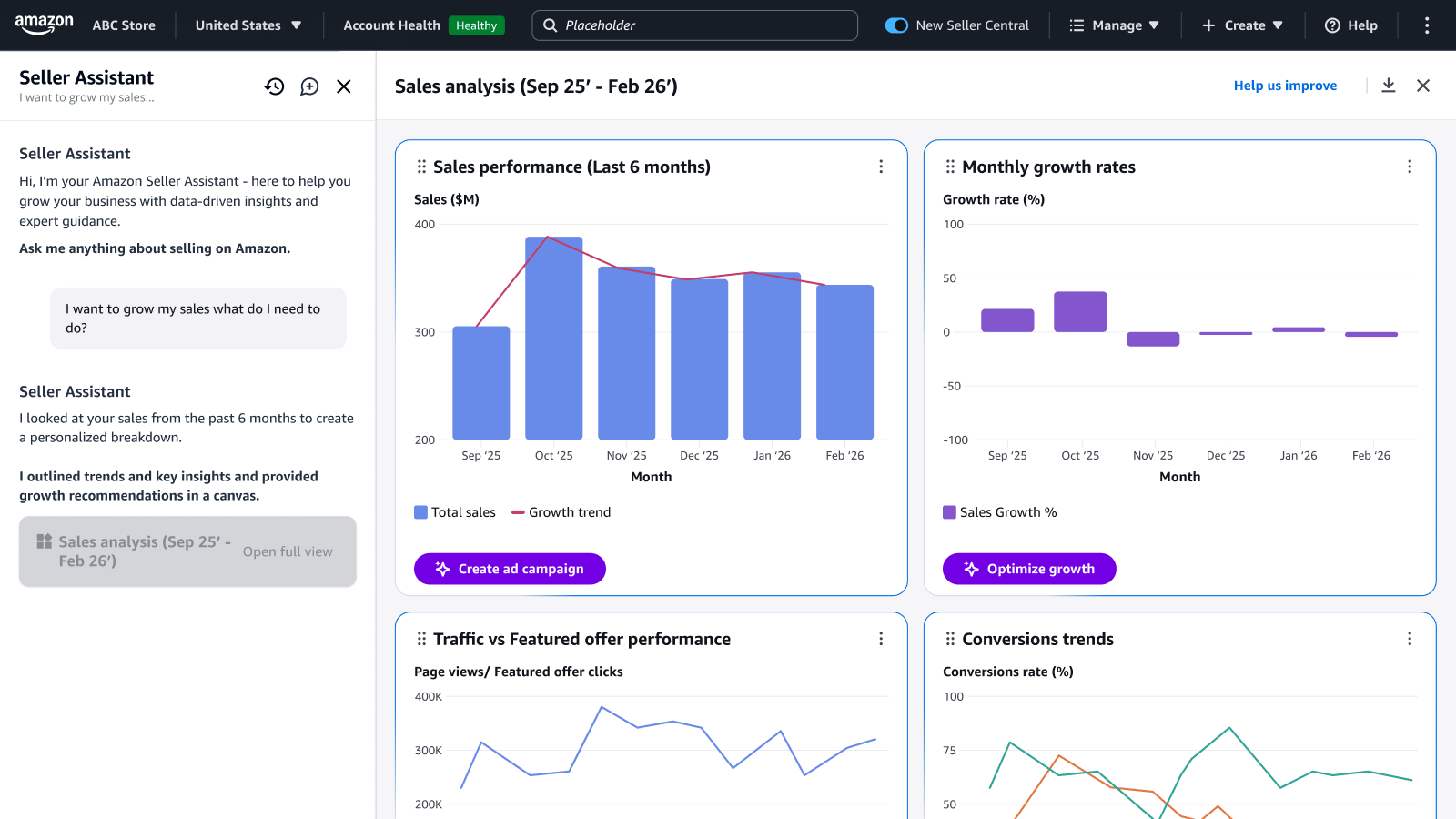
Source: Amazon
Amazon is rolling out a new AI canvas experience in Seller Central that blends Seller Assistant chat with dynamic, personalized visuals. Sellers can generate interactive workspaces that pull in real-time data, surface insights, and recommend actions, then refine everything through follow-up prompts.
Here’s the lowdown ⬇️:
🧠 From chat to dashboards automatically: Ask Seller Assistant a question (or pick a suggested prompt) and Amazon generates a personalized canvas that combines data, insights, and next steps tailored to your business.
📊 Live visuals that adapt as you dig deeper: Sellers can drill into any insight, request a different angle, and the canvas updates instantly with new charts, deeper data, and fresh recommendations.
📣 Marketing and inventory planning get a simulator layer: Amazon says the canvas can evaluate ad performance (spend, impressions, conversions, lift) and propose multiple strategies with projected outcomes. For inventory, it can model “restock vs delay vs discount” with projected impact on revenue, cash flow, stockout risk, and storage fees, plus what-if scenarios.
🛠️ Built on Amazon’s agentic stack: The experience runs on Amazon Bedrock and uses models including Amazon Nova and Anthropic Claude. It’s built on Seller Assistant’s agentic architecture.
✅ Available now in the U.S. and U.K.: Amazon says it’s live at no additional cost for sellers in the U.S. and U.K., with more capabilities rolling out in the coming months.
Why it matters 🤔
Seller tools are shifting from reporting to decision support. If the canvas reliably turns messy account data into clear options and tradeoffs, it changes what “good operator” looks like. That is, less time spent building spreadsheets, and more time choosing the right move and executing faster. It’s a game-changer, seeing you can “chat” with your business data.
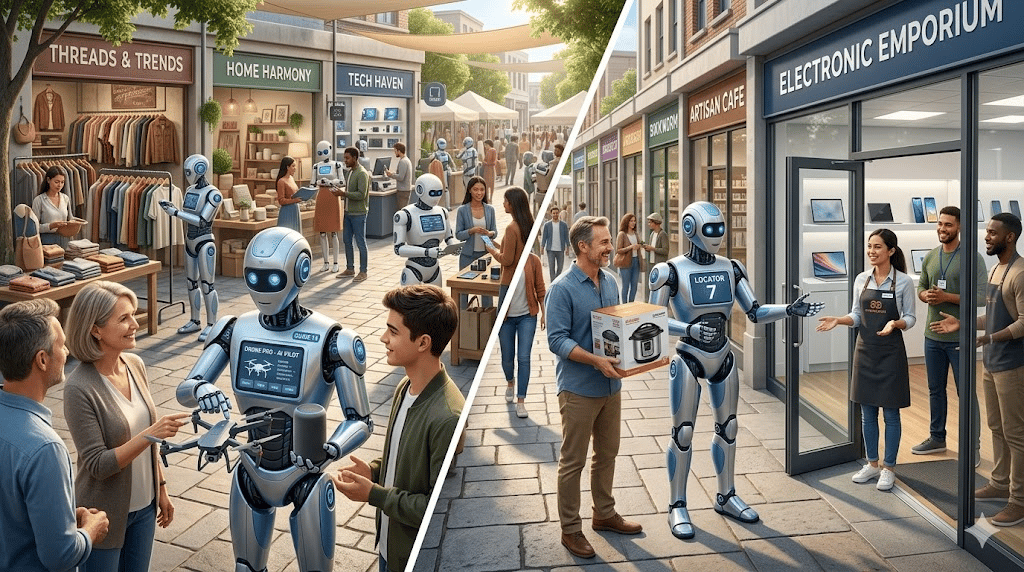
Source: Gemini
OpenAI is scaling back plans for native checkout in ChatGPT. Instead of completing purchases inside ChatGPT, “Instant Checkout” is moving to connected apps and services, while ChatGPT focuses on product discovery.
Here’s the scoop 🍨:
🛒 Checkout moves out of ChatGPT: OpenAI says purchases will happen inside connected retailer apps/services rather than natively in ChatGPT, marking a shift from earlier plans to keep the full transaction inside the chat experience.
📉 Why the pivot: Reporting says OpenAI found that users often research in ChatGPT but don’t complete purchases there, and only a small number of merchants were actively using native ChatGPT checkout.
🔎 Discovery becomes the priority: OpenAI will prioritize improving product search and discovery inside ChatGPT, leaning into where user behavior is strongest today.
🔐 ACP stays as the connective tissue: OpenAI will keep working with Stripe on the Agentic Commerce Protocol, positioning it as the infrastructure that connects users to merchants across the buying journey, even if checkout happens elsewhere.
🧭 Implications for the roadmap: Instant Checkout was framed in 2025 as a major commerce push, with ambitions like broader merchant expansion and richer cart flows. The new direction suggests OpenAI is choosing to assist the decision rather than own the transaction, at least for now.
Why it matters 🤨
This keeps power with retailers. The last click stays in brand-owned apps/sites where policies, inventory realities, and customer support already live. For marketers, it also hints at where ChatGPT monetizes next: if it can’t reliably take a cut of checkout, the economic center shifts to paid discovery and partner-driven clickouts.
🤑 Sponsored tip of the week
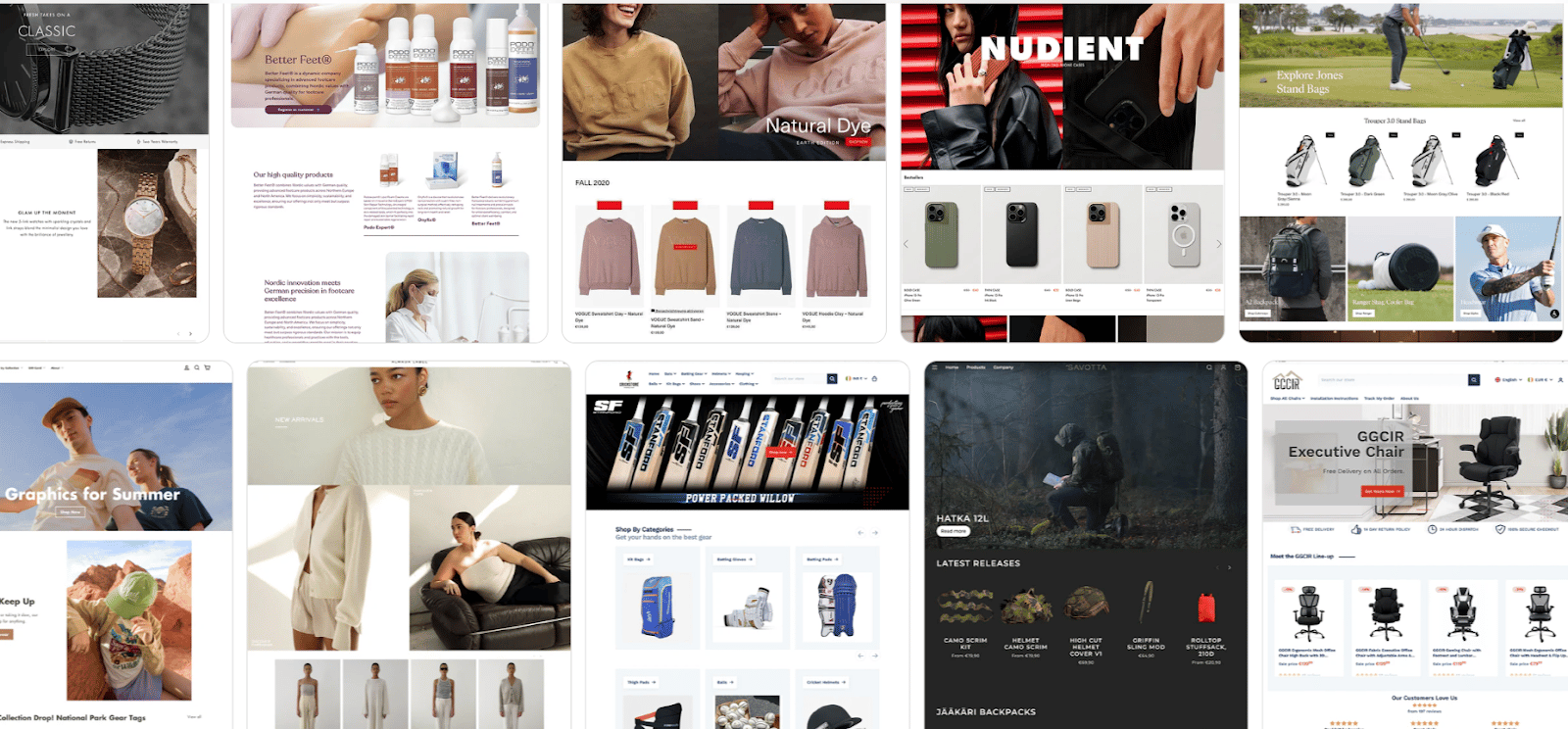
🚀 Explore the Power of the Shopify Theme Store
A great store starts with a great first impression — and Shopify’s Theme Store gives you just that. With 100+ professional, mobile-optimized themes, you can easily craft a storefront that feels just right for your brand, no code required.
Get started for just $1 and pick your perfect theme today.

Source: Gemini
Meta is testing a new shopping research experience inside Meta AI for some U.S. users, returning product recommendation carousels with pricing and merchant links when users ask shopping-related questions.
Here are the deets ⬇️:
🛍️ Product carousels inside chat: When users request product suggestions, Meta AI can respond with a carousel of items showing images and captions that include the brand, website, and price, plus a brief bullet-point rationale for the picks.
📍 Personalization uses Meta signals: Bloomberg’s testing found recommendations can be tailored using Meta’s knowledge of a user’s location and gender inferred from their name, shaping which products appear for the same query.
🔗 Clickouts, not checkout: There’s no built-in payment flow in the chatbot. Users click merchant links to browse and buy elsewhere, positioning this as discovery and research rather than a full commerce loop.
🧾 Meta confirms the test, keeps details tight: A Meta spokesperson confirmed the feature is being tested, but declined to comment on monetization mechanics like referral commissions or whether Meta AI prioritizes brands that already advertise on Meta platforms.
💰 A clear monetization thread: The test arrives as Meta emphasizes “uniquely personal” AI experiences and the industry searches for revenue paths to justify rising AI costs and infrastructure investment.
Why it matters 🤷
The main advantage here isn’t just AI but identity-level personalization. With shopping suggestions becoming shaped by social and behavioral signals, product discovery will clearly be tailored for customers, as should be. Ultimately, the competitive bar for brands remains, such that you’ll need to win relevance in a system with effective personalization.
🛎️ The Ecom Press Insider
Source: Google Gemini
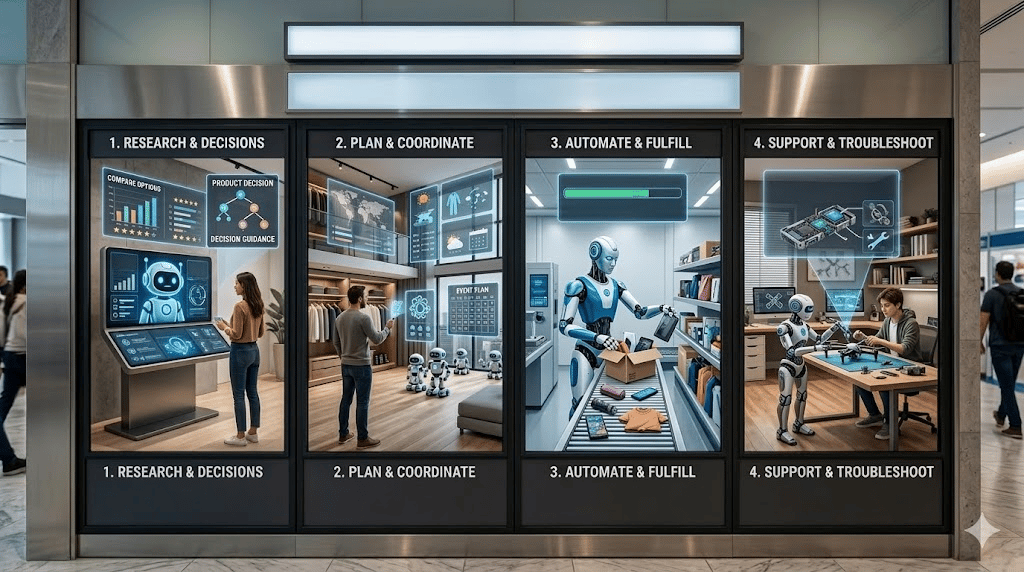
Ecom Fact: In a survey, 71% of the 5,000 U.S. consumers use AI tools, and 37% use them frequently (daily or several times a week). That signals AI is no longer occasional help for shoppers but a regular interface people rely on to research, plan, and make decisions. (Source: Numerator’s December 2025 Consumer AI Adoption Trends)
💡 Takeaway: Build a simple “AI readiness” workflow for your brand: one doc that houses your key product answers (use cases, comparisons, FAQs, shipping, returns). Update it monthly from real customer questions in support, reviews, and DMs. Then reuse it everywhere so your site, ads, and support always tell the same story.
🚀 Ecom strategies: Five practical ways to use AI beyond chatting
AI isn’t just for chatting or cranking out captions 😅. There’s so much more brands can do with AI. For example, you can deploy these tools to build systems that run quietly in the background and keep your business moving. Here are five simple plays to try:
1) Use AI as your daily operations assistant 📋: Have AI review your sales, expenses, inventory, and to do list, then send a short daily plan. It should flag low stock items, overdue payments, and what to prioritize today. The goal is fewer decisions in your head and more actions on a clear list.
2) Build a niche advisor your customers can use 💬: Create an AI helper trained on your FAQs, SOPs, and past chats so it gives guidance the way your brand would. Use it on your site as a lead magnet and also internally to draft quotes, scripts, and recommendations faster.
3) Set up AI to catch churn before it happens 📩: Let AI track customer behavior and spot signs someone is slipping away. Instead of blasting discounts, use it to trigger smarter moves like a personal check in, a helpful message, or a small bundle offer based on what they actually do.
4) Turn your files into an AI searchable brain 🗂️: Upload your proposals, docs, emails, and past campaigns into one searchable system. Your team can ask “where’s our best pitch deck” or “what did we use last time” and get answers instantly, without hunting through folders.
5) Run small experiments every week with AI 🧪: Use AI to suggest quick tests like a new headline, a different bundle, or a new free shipping threshold. Track results weekly and keep what works. This keeps your store improving continuously without heavy CRO work.
⚡️Worthy Mentions
Middle East conflict disrupts logistics behind US B2B ecommerce.
X ad test adds product links under posts.
Amazon lawsuit forces Perplexity to stop AI shopping access.
Best Buy push aims to lead agentic AI discovery.
Wrapping up…
This week felt like a snapshot of where AI commerce is headed.
Amazon is pushing sellers toward faster decisions with chat-to-insight workspaces. OpenAI is tightening its focus on discovery, even if checkout happens elsewhere. And Meta is edging closer to turning AI chat into a product research layer.
PS: OpenAI’s adaption is worth taking note of!
That’s it for this week. If you enjoyed this issue, share it with a friend 📬. And if you haven’t subscribed yet, now’s a good time to fix that 🚀.