- Santrel Media
- Posts
- Amazon Lets Shoppers Buy from Third-party Stores 🛍️
Amazon Lets Shoppers Buy from Third-party Stores 🛍️
Plus: Google tests Sponsored Shops in Shopping results 🛒, while Meta adds new AI tools to Facebook Marketplace 🤖.


Want to start selling online? Get started with Shopify for just $1.
Amazon is now sending shoppers to brands that do not even sell on Amazon. Yep, interesting times, right 🛍️?
Hi there, and welcome to another issue of The Ecom Press 🗞️!
This week, Amazon opens the door wider for merchants to reach its shoppers. Google is also testing Sponsored Shops, potentially making store-level visibility a much bigger deal inside Shopping results. And over on Facebook Marketplace, Meta is giving sellers a fresh AI toolkit. 🤖
Plus, if starting a merch brand has been sitting somewhere on your “one day” list, our workshop this week breaks down how to get one off the ground with Gelato. 👕
It’s a packed week. Let’s get into it 🚀.
In a rush? Here's the juice🤭:
🛍️ Amazon lets shoppers buy from third-party stores.
🛒 Google tests Sponsored Shops in Shopping results.
🤖 Meta adds new AI tools to Facebook Marketplace.
🛠️ Workshop: How to build a merch brand with Gelato
⚡️Worthy Mentions
Source: Amazon
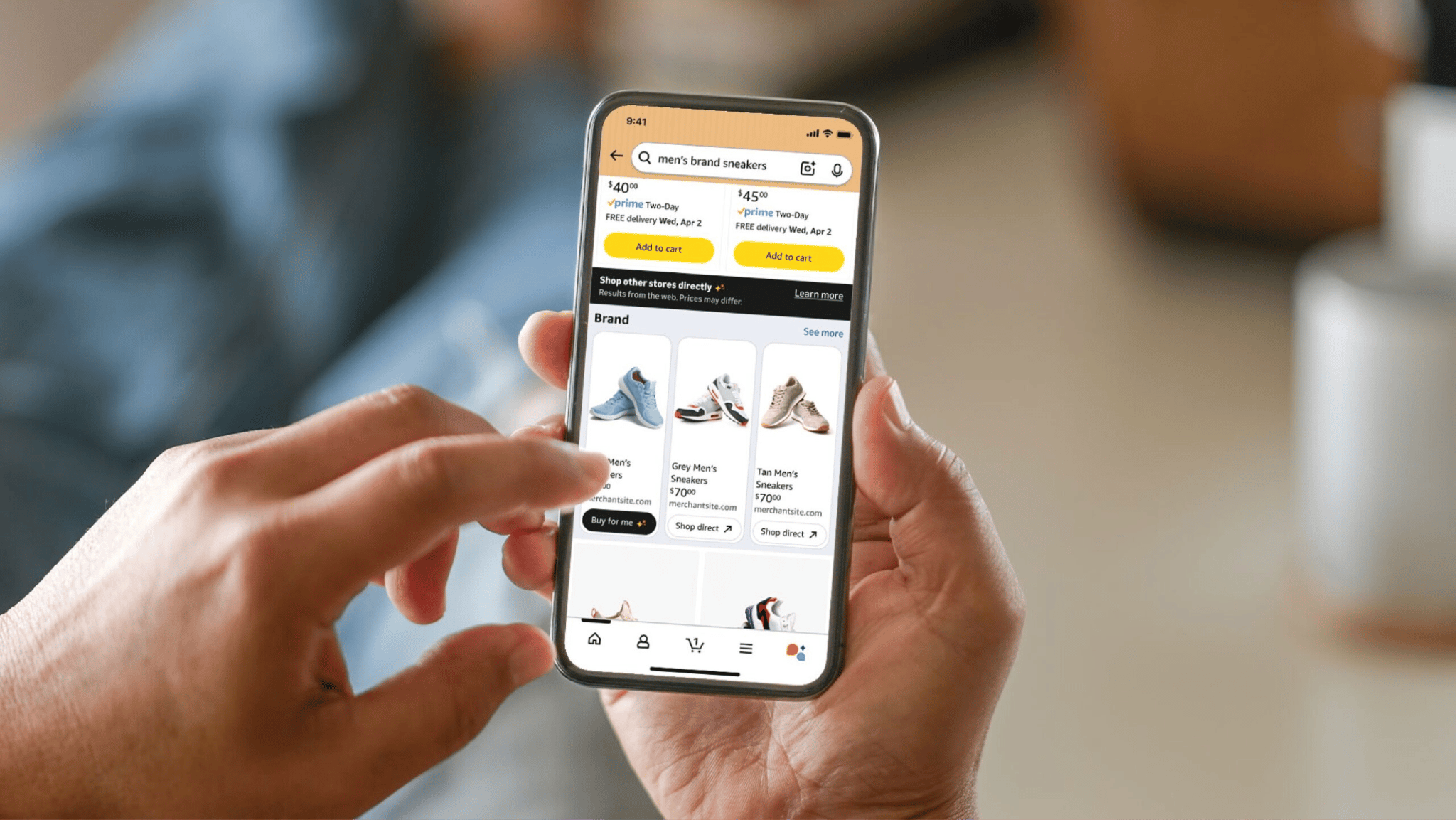
Amazon is making Shop Direct easier for merchants to join by letting them connect product catalogs through third-party feeds. That means more brands can show up in Amazon search and Rufus, even if their products are not sold on Amazon itself.
Here’s the lowdown ⬇️:
📦 Amazon is widening access to Shop Direct: Shop Direct is Amazon’s AI-powered experience for surfacing products from stores across the web when shoppers search on Amazon. The goal is to help customers find and buy what they want, even if Amazon does not carry it directly.
🔗 Merchants can now join through feed partners: Amazon is opening participation through feed syndicators including Feedonomics, Salsify, and CEDCommerce. Merchants can use existing product feeds to sync catalog, pricing, and inventory in real time, reducing onboarding friction.
🤖 The products can show up across Amazon’s AI surfaces: These listings are not limited to standard search. Amazon says participating products can also appear through Rufus, its AI shopping assistant, extending merchant visibility into conversational discovery.
🛒 Customers get two ways to buy: Shoppers can click Shop Direct to go to the merchant’s website and buy there. For eligible products, they can also use Buy for Me, which lets Amazon complete the purchase on their behalf using saved address and payment details.
📈 Amazon is already showing serious scale: Shop Direct now includes more than 100 million products from over 400,000 merchants, and tens of millions of items are available through Buy for Me. Amazon also says it has already referred customers millions of times to external merchant products.
🏷️ Amazon says merchants still keep visibility: Merchant store names are clearly shown so shoppers know who they are buying from. Amazon is positioning this as a way for brands to gain exposure while still maintaining their customer relationship.
Why it matters 🤔
Amazon is building itself into the layer where shopping starts, even when the final sale happens elsewhere. That could give brands more exposure, but it also means Amazon is inserting itself deeper into discovery, intent, and increasingly the transaction itself.

Source: Search Engine Land
Google appears to be testing a new Sponsored Shops format in Shopping results that promotes entire retailers instead of single products. The move could push Shopping ads toward store-level competition, where assortment, ratings, and brand presence matter more.
Here’s the scoop 🍨:
🏪 Google is testing store-led Shopping placements: Instead of surfacing one sponsored product at a time, the new format groups several items from the same retailer into one ad block. It functions like a mini storefront inside Shopping results.
📦 The unit highlights more than just products: The block includes the store name, multiple products, and trust signals like ratings or broader brand presence. That gives retailers more room to present themselves as a destination, not just a seller of one item.
🎯 Change to brand competition: This could shift competition from individual SKUs to overall store presence. Rather than relying on one strong product to win visibility, brands may need stronger product feeds, broader assortments, and better seller signals to qualify for these placements.
🔀 Multiple click paths: Users may be able to click a product, a store name, or other elements within the unit. That could affect where traffic lands and complicate attribution, especially if advertisers are trying to separate store intent from product intent.
📈 A slightly different role for Shopping ads: If Google rolls this out more widely, Shopping may move a bit higher up the funnel. Brands would be able to showcase a wider product range while reinforcing store identity in one placement, instead of competing only at the single-product level.
Why it matters 🤨
This is a small test with bigger strategic implications. If store-level visibility becomes more important, brands may need to look beyond products to actually optimise for trust signals, assortment depth, and the quality of the retail experience they project inside Google’s ecosystem.
🤑 Sponsored tip of the week

🛒 Sell Everywhere from One Place with Shopify Sales Channels.
From Instagram and Facebook to your blog, the Shop App, or even in-person — Shopify lets you manage all your sales channels in one dashboard.
Easily sync your product catalog, track orders, and engage customers across platforms like POS, Shopify Inbox, and your online store — no need to juggle tools or tabs.
Source: Meta
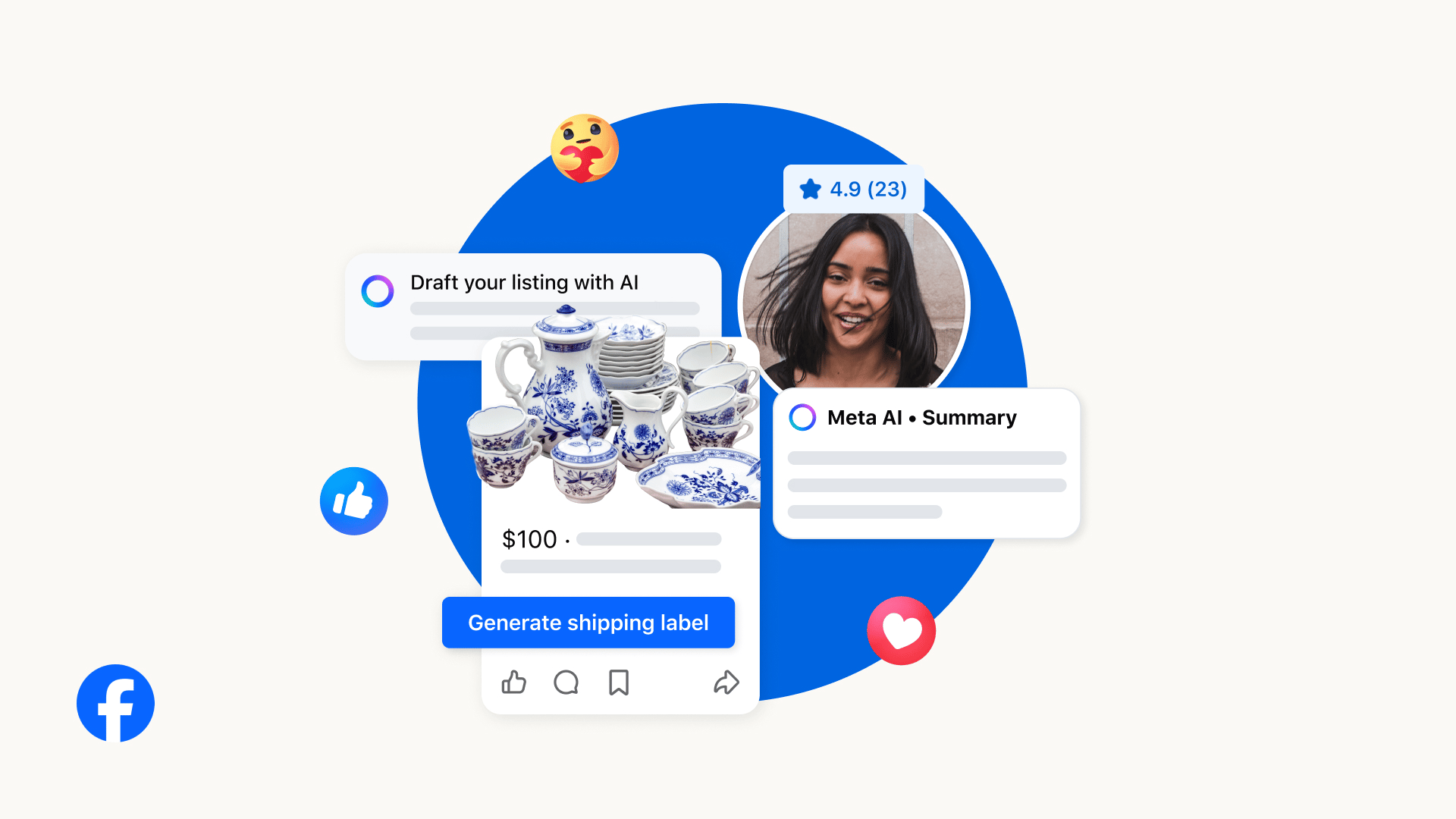
Meta is adding new AI tools to Facebook Marketplace to help sellers list products faster, respond to buyers more easily, and build trust through AI-generated profile summaries.
Here are the deets ⬇️:
📸 Meta AI can now create listings from photos: Sellers can upload item images and let Meta AI generate a draft listing automatically. The system fills in product details and can even suggest a local market-based price, cutting down the effort needed to post items.
📦 Shipping is getting easier: Meta is making it easier for sellers to offer shipping, not just local pickup. Sellers can generate prepaid shipping labels quickly and manage shipped orders through one dashboard, which could help them reach more buyers.
💬 AI handles common buyer questions: Marketplace sellers can now use Meta AI to draft responses when buyers ask about things like availability. Replies draw from listing details such as price, pickup location, and item description, and sellers can preview or edit them before use.
🛡️ Meta is adding more trust signals: Buyers will now see an AI-generated profile summary at the top of a seller’s Marketplace profile. This includes Facebook account details, Marketplace activity, item categories sold, and seller ratings to help buyers evaluate credibility faster.
Why it matters 🤷
Beyond the convenience, Meta is trying to turn Marketplace into a more structured selling environment without making it feel like a formal ecommerce platform. With more than 3.5 million listings posted daily in the US and Canada, these tools appear designed to help sellers list more items with less manual effort while making transactions feel smoother for buyers.
🛎️ The Ecom Press Insider

Source: Google Gemini
Ecom Fact: More than 90% of enterprise ecommerce leaders expect AI agents to influence at least 20% of online orders by 2027. Even more striking, over one-third believe these agents could shape more than half of all online transactions.
💡 Takeaway: Make your store easier for machines to shop, not just people. Clear product titles, structured specs, accurate inventory, transparent pricing, and strong first-party data will matter more when agents start comparing options and making purchase decisions.
🛠️ Workshop: How to Build a Merch Brand with Gelato

Want to launch merch without sinking money into bulk inventory first? Here’s how to do it with print on demand, using Gelato + Shopify to design, test, list, and sell with less upfront risk.
🎥 Watch the full tutorial here if you want the full walkthrough.
Here’s a rundown😀
🔍 1. Start by spotting what already sells: Instead of brainstorming in a vacuum, study adjacent niches on Etsy and look for patterns in designs, fonts, humor, and layouts that already resonate. The play here is not copying, but borrowing winning concepts and adapting them to a new audience.
🎨 2. Build the design with AI or Canva: Use generative AI for fast concept creation, then refining with Canva if needed. That gives you speed upfront and more control when it’s time to fine tune fonts, layouts, and visual balance.
📦 3. Use print on demand to stay flexible: The big advantage here is flexibility. You can test multiple designs, switch directions quickly, and avoid paying for inventory, storage, and fulfillment before you know what actually sells.
👕 4. Pick the right product and print method: Match the print method to the fabric and design, and when in doubt, order samples of both before scaling.
🛒 5. Connect Gelato to Shopify and publish fast: Once Gelato is connected to Shopify, product changes sync automatically and orders flow straight to fulfillment. That means you can focus more on the brand and store experience, and less on patching systems together manually.
📸 6. Order a sample before you go all in: Place a sample order through your own store. That lets you check print quality, review the customer journey, and get real product photos instead of relying only on mockups.
Getting merch live is easier now, but getting it to feel like a real brand still takes taste, testing, and a bit of patience. Thankfully, you can do all three without overcommitting too early. 🎥 Catch the full tutorial for the full build.
⚡️Worthy Mentions
Amazon Spring Sale kicks off march 25 with early deals already live.
OpenAI integrates Sora into ChatGPT.
Mastercard AI suite offers “virtual c‑suite” for small businesses.
Amazon launches 1‑ and 3‑hour delivery pilot across the U.S.
Shopify Sidekick strategy bets big on AI shopping agents.
Wrapping up…
This week’s updates point to the fact that discovery is getting broader and a little more platform-controlled. 🔎
Platforms are finding new ways to sit closer to product discovery, buyer intent, and purchase decisions. That certainly creates fresh opportunities for brands.
Quite a week, really. Catch you in the next one and, if you haven’t subscribed yet, now’s a good time to fix that 📩.