- Santrel Media
- Posts
- Gemini orders food and Uber inside apps 🍕
Gemini orders food and Uber inside apps 🍕
Plus: eBay tests agentic AI search for shoppers 🤖, while Etsy joins Google’s New agentic commerce checkout system 🛍️.

Want to start selling online? Get started with Shopify for just $1.
Agentic commerce is picking up speed fast… and this week’s updates make that pretty hard to ignore 🤖⚡️.

Hi there, and welcome to another issue of The Ecom Press 🗞️!
On the menu today: Google Gemini is starting to handle real tasks inside apps on select flagship Android devices 📱, eBay is baking agentic AI directly into search so shoppers can refine results through conversation 🔎, and Etsy is tapping Google’s new checkout protocol to push AI-driven shopping traffic closer to purchase 🛍️
Plenty to unpack. Let’s get into it 👇.
In a rush? Here's the juice🤭:
🍕 Gemini orders food and Uber inside apps.
🤖 eBay tests agentic AI search for shoppers.
🛍️ Etsy joins Google’s New agentic commerce checkout system.
🚀 Ecom strategies: How to boost your checkout game 🧠
⚡️Worthy Mentions

Source: Google
Google is adding task automation to Gemini on select flagship Android phones, letting the assistant complete multi step actions inside apps like Uber and DoorDash. The feature opens apps in a virtual window, works through each step, and then hands control back to the user for final confirmation.
Here’s the lowdown ⬇️:
📱 Where it’s launching first: Gemini task automation will roll out first on Samsung Galaxy S26 devices starting March 11, and later via a software update on the Google Pixel 10 lineup. Early availability is limited to the US and South Korea, and the feature is still in early preview or beta.
🚕 What Gemini can do today: The initial partner set covers high frequency tasks such as:
Booking rides through Uber
Ordering food via DoorDash
Additional early support for Uber Eats and Grubhub
🪟 How the automation actually works: You start with a prompt like “Get me an Uber to the airport.” Gemini then:
Opens the relevant app in a virtual window
Clicks through steps using reasoning to choose options and fill details
Runs in the background while you monitor progress via live notifications
Pauses if it needs clarity, like choosing between airports or handling out of stock items
Stops at the final step so you can confirm fare, ride type, or submit the order yourself
🔧 The tech behind it: Google says Gemini can operate through multiple layers:
Developer exposed actions using MCP or Android app functions
Or, when no integration exists, Gemini attempts to navigate the interface on its own
📦 Bigger Android roadmap
Google’s Android ecosystem president Sameer Samat says this moves Android toward an “intelligence system,” and similar automation capabilities should expand further with Android 17.
Why it matters 🤔
Brands may increasingly compete for AI selection rather than screen attention. We’re seeing more agents carrying out tasks on users’ behalf, and ultimately, visibility will depend on how well a service integrates with these automation layers.

Source: PYMNTS.com
eBay is testing agentic AI search that lets shoppers browse in a back-and-forth conversation, with the company scaling access through 2026. Instead of launching a separate AI shopping assistant, eBay is integrating agentic behavior directly into search.
Here’s the scoop 🍨:
🔎 Agentic search is already live for some users: eBay began rolling it out to a subset of U.S. mobile traffic in December, and plans broader expansion throughout 2026.
💬 Shopping becomes a dialog: CEO Jamie Iannone says buyers can use natural language in a “back-and-forth” exchange, similar to talking with a sales associate, so they can refine filters based on style, preferences, and shopping history.
🧠 Built for eBay’s kind of inventory: eBay argues it has an edge because its catalog isn’t mostly new, in-season SKUs. Iannone said ~90% of GMV is non-new in season, and about two-thirds intersects with recommerce, C2C, or focus categories. It also includes often high-consideration items like used, refurbished, collectible, or luxury where condition and scarcity matter.
🔌 A platform that can connect to other agents: Beyond building in-house, eBay says it has a unified agentic commerce platform that can plug into third-party agents to test different experiences and see what works.
🛡️ Trust is the selling point: eBay points to seller feedback, authenticity programs, buyer protections, and shipping/financial services as hard-to-replicate infrastructure for agent-led shopping.
Why it matters 🤨
Agentic search may not be new, but embedding it directly into the core search experience is a strategic choice. Instead of pushing users to a separate AI assistant, this approach lowers the learning curve for buyers, quietly contributing to how search is changing.
🤑 Sponsored tip of the week
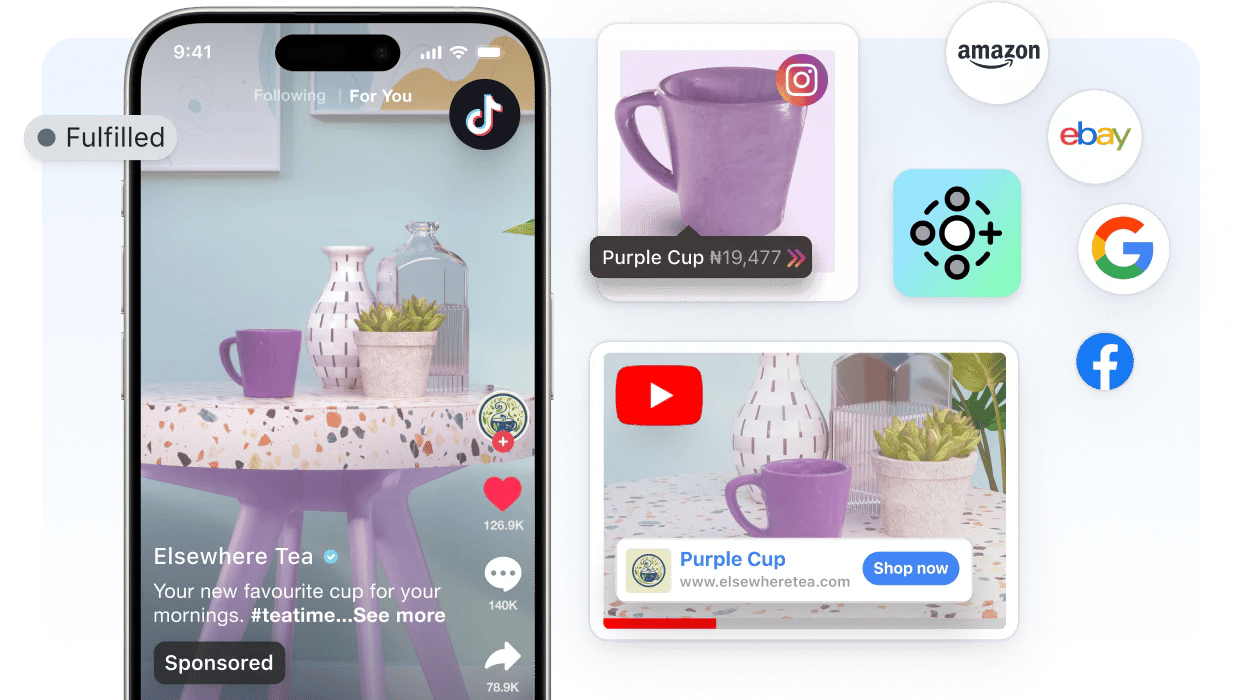
🛒 Sell Everywhere from One Place with Shopify Sales Channels.
From Instagram and Facebook to your blog, the Shop App, or even in-person — Shopify lets you manage all your sales channels in one dashboard.
Easily sync your product catalog, track orders, and engage customers across platforms like POS, Shopify Inbox, and your online store — no need to juggle tools or tabs.

Source: ChatGPT Image Generator
Etsy is beginning to receive AI-driven shopping traffic as Google rolls out Universal Commerce Protocol (UCP), a new standard that allows shoppers to discover and purchase products directly inside AI interfaces like Google’s AI Mode and the Gemini app.
Here are the deets ⬇️:
🤖 AI discovery now leads directly to checkout: Google’s UCP standard now enables U.S. shoppers to purchase items from Etsy and Wayfair directly inside AI Mode in Search and the Gemini app, without leaving the interface. The protocol connects AI assistants with merchant systems so the buying journey can move from discovery to checkout within the same conversation.
🔗 A standard designed to connect AI agents and commerce systems: UCP acts as a shared protocol that lets AI agents interact with retailers, payment providers, and commerce platforms using a unified framework. Instead of merchants building custom integrations for every AI platform, compatible agents can plug into one system.
🧩 Built to work with other AI commerce protocols: The system is designed to integrate with several emerging standards, including Agent2Agent (A2A), Agent Payments Protocol (AP2), and Model Context Protocol (MCP). It aims to help different AI systems coordinate actions across the buying process.
📈 Industry interest is accelerating: Google says hundreds of retailers, tech companies, and payments providers have already expressed interest in integrating with the protocol.
Why it matters 🤷
The more platforms adopt shared agentic standards, the faster AI becomes a critical transaction layer, and not just a discovery tool. It’s worth the shot, considering the traffic it has gotten since onboarding.
🛎️ The Ecom Press Insider
Source: Google Gemini
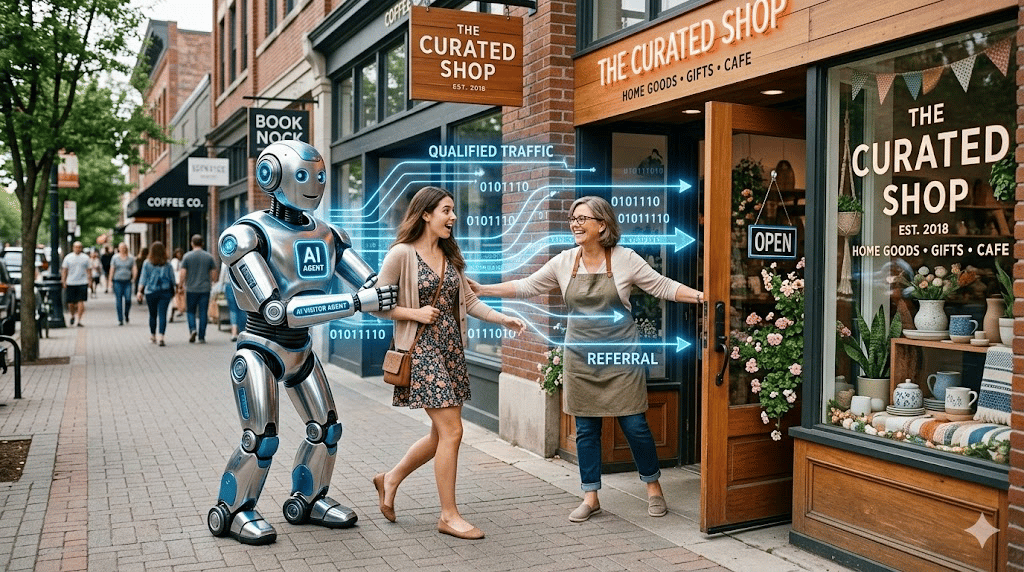
Ecom Fact: A 12-month GA4 analysis across 94 ecommerce sites found that ChatGPT-referred traffic converted 31% higher than non-branded organic search in 2025. Still, it represented a relatively small share of total revenue over the January–December period. (Source: Visibility Labs)
💡 Takeaway: Treat AI referrals like a high-intent channel and build a simple system to learn from it. If the volume is small but quality is high, your goal is to make every AI-driven visit easier to complete, and to replicate whatever those pages are doing right across the rest of your site.
🚀 Ecom strategies: How to boost your checkout game 🧠
AI is doing a lot these days… but checkout is still where the money gets decided 😅🛒. As such, we’re spotlighting five practical checkout strategies you can use to reduce hesitation, keep shoppers moving, and lift conversions without turning your store into a discount machine. Let’s dive in👇:
1) Build a checkout for each intent 🎯: Most brands run one checkout for everyone, even though shoppers arrive with totally different context. Create small variations based on source: ad traffic sees the exact promise they clicked, influencer traffic sees creator proof and the “what you get” recap, email traffic gets a faster path back to their cart. The goal is to discourage people trying to re-figure out what they’re buying at checkout.
2) Add a two-lane checkout Fast lane vs Need help 🚦: Not everyone needs the same level of reassurance. Give confident buyers a clean, minimal path to pay, while offering a “Need help” lane that expands sizing info, delivery timeline, returns summary, and support. You’ll reduce drop-offs without forcing extra friction on buyers who were already ready.
3) Replace coupon hunting with smart savings 🔐: Coupon fields create a reflex to leave checkout and search for codes. Instead, hide the code box behind “Have a code?” and use auto-applied offers that feel fair. That is, bundle savings, free shipping thresholds, or small instant credits. It keeps customers in flow and protects margins.
4) Add a decision card before payment 🧾: Right before checkout confirmation, drop a short reassurance block that answers the last-mile doubts: delivery window, returns in one line, what’s included, and how to reach support. Keep it compact, specific, and easy to scan. This is where hesitation usually shows up.
5) Make one-click swaps for the top objection 🔁: If your biggest checkout friction is “wrong size, wrong color, wrong option,” don’t force shoppers back to the product page. Add a quick swap option in checkout, with 2–3 smart alternatives. It saves carts that would otherwise die from small uncertainty.
⚡️Worthy Mentions
Wrapping up…
What a week. Agentic commerce is showing up as a bunch of small, very practical upgrades across the stack 🎴.
Gemini is getting closer to doing tasks, not just answering questions. eBay is reworking search around conversation. And Etsy is gaining a faster path from AI discovery to checkout through Google’s UCP 🚂.
Well, that’s it for this week. If this issue helped, share it with someone building in ecommerce 📬 And if you haven’t subscribed yet, now’s a good time to fix that 🚀.