- Santrel Media
- Posts
- Google launches protocol for agent-led shopping 🤖.
Google launches protocol for agent-led shopping 🤖.
Plus: Pinterest set to launch new shoppable series 🛍️, while JD Sports plans to let shoppers buy through AI platforms 🛒.


Want to start selling online? Get started with Shopify for just $1.
Agentic shopping didn’t waste any time this year; the AI shopping train is already picking up some speed 🚆🤖.
Hi there, and welcome to another issue of The Ecom Press 🗞️!
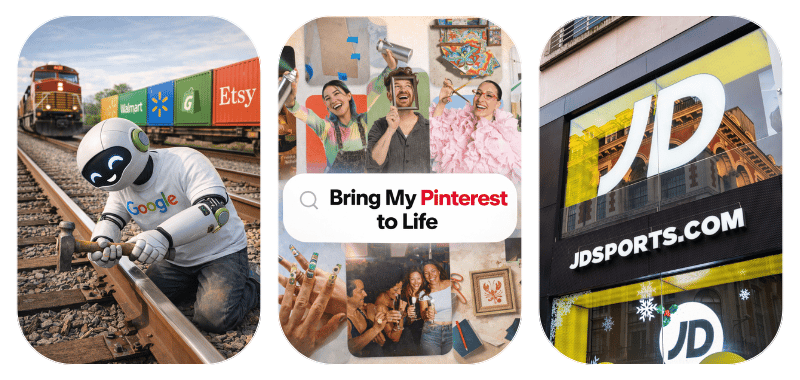
This week, Google is setting the groundwork for agent-led commerce, Pinterest is turning inspiration into shoppable TV, and JD Sports is moving AI discovery straight to checkout 📱.
Ready or not, let’s get into it 👇
In a rush? Here's the juice🤭:
🤖 Google launches new protocol for agent-led shopping.
🛍️ Pinterest set to launch new shoppable series.
🛒 JD Sports plans to let shoppers buy through AI platforms.
🛠️ Workshop: How to build a clean Wix website.
⚡️Worthy Mentions

Source: Google
Google is pushing agentic commerce closer to everyday use with the launch of the Universal Commerce Protocol (UCP). The UCP is a new open standard designed to let AI agents handle shopping tasks across discovery, checkout, and post-purchase support. The company says the goal is to remove friction as AI agents increasingly act on shoppers’ behalf.
Here’s the lowdown ⬇️:
🔗 A start point for agents and retailers: UCP creates a common protocol that allows AI agents, merchants, platforms, and payment providers to work together without one-off integrations. It’s built to work across industries and alongside existing standards like Agent Payments Protocol and Model Context Protocol.
🤝 Backed by major commerce players: The protocol was co-developed with retailers and platforms including Shopify, Etsy, Wayfair, Target, and Walmart, and endorsed by payments and commerce companies such as Visa, Mastercard, Stripe, Adyen, and American Express. That breadth signals early alignment around how agent-led shopping should work.
🛒 Checkout inside Google’s AI experiences: UCP will power a new checkout flow in Google’s AI Mode in Search and the Gemini app. Shoppers can complete purchases while researching, using Google Pay and saved Wallet details, with PayPal support planned.
🤖 New tools for brand interaction and offers: Google also announced Business Agent, a branded AI assistant that lets shoppers chat directly with retailers in Search. On top of that, new Merchant Center data attributes and a Google Ads pilot called Direct Offers aim to surface relevant discounts at high-intent moments.
🏬 Walmart deepens its AI commerce push: Alongside the protocol news, Walmart revealed a partnership with Google to enable product discovery and purchases through Gemini. It follows Walmart’s ChatGPT checkout rollout and reflects how large retailers are adapting to searches that start in AI assistants, not store apps.
Why it matters 🤔
UCP certainly helps to reduce fragmentation, but also raises the bar for retailers. Product data, availability, pricing, and policies now need to be consistent enough for agents to act without human correction. This is critical in shaping how these agents recommend, transact, and resolve issues.

Source: Pinterest
Pinterest is launching a new DIY lifestyle series on Roku called Bring My Pinterest to Life, debuting in March. Across six episodes, three creator hosts will work with everyday people to transform Pinterest boards into real spaces and projects, with a built-in path from watching to saving ideas and then shopping.
Here’s the scoop 🍨:
📺 From inspiration to execution: The show follows an “inspiration to realization” storyline where the boards drive the plan and the episode shows the build. Pinterest wants viewers to move seamlessly from the episode back into Pinterest to save ideas.
🛍️ Shoppable by design, not via ad breaks: Instead of traditional commercial slots, brand partners are integrated into the narrative. Wayfair products anchor a patio makeover, eos supports a personal routine-focused transformation, and Michaels supplies materials for DIY and craft projects.
🤝 Built with partners to create a full funnel loop: Pinterest is positioning this as a watch-to-action journey: discover in context, save on Pinterest, then shop through partner experiences.
📈 This connects to Pinterest’s bigger TV push: The series lands soon after Pinterest’s plan to acquire tvScientific, a CTV performance ad platform, as it tries to bring performance-style measurement to TV and extend Pinterest demand beyond the app.
Why it matters 🤨
Pinterest is leaning into how people already behave, because people don’t just watch DIY content to be entertained but to copy it. For ecommerce brands, this shifts the focus from single hero products to complete ideas. If your product helps someone finish a project, routine, or space, it has a much better chance of showing up and selling in this kind of format.
Watch the Bring My Pinterest to Life series trailer.
🤑 Sponsored tip of the week

💡 Sell More with Shopify’s Faster Cart & Checkout
Shopify carts now load up to 50% faster, and the sleek one-page checkout keeps buyers moving. Longer cart life means more time to buy, fewer drop-offs, and more conversions.

Source: Retail Gazette
JD Sports says it’s starting to test agentic commerce, letting shoppers move from AI-powered product discovery straight into checkout and payment without leaving AI interfaces. Announced at NRF 2026, the retailer’s goal is to support shopping journeys that begin inside AI tools instead of a website or app.
Here are the deets ⬇️:
🧠 Discovery happens in AI: JD says purchases initiated inside AI environments will still run through its normal ecommerce systems, so pricing, availability, and fulfillment rules stay consistent across channels.
💳 Stripe handles secure checkout and fraud: Stripe is powering checkout, payments, and fraud protection through its Agentic Commerce Suite, turning AI-driven intent into a standard, secure transaction flow.
🧩 commercetools keeps product data governed: commercetools provides the commerce layer linking AI discovery to JD’s product and transaction systems, with emphasis on approved pricing and real-time availability so AI surfaces don’t drift from what JD can actually sell.
🧭 Rollout: JD will begin in the U.S., deploying Microsoft Copilot first, then expanding to Gemini and ChatGPT.
Why it matters 🤷♂️
Instead of rebuilding commerce from scratch, JD’s connecting AI entry points to the same systems that keep pricing, stock, and fulfillment reliable. Again, the competitive edge may come from being able to expose clean, real-time product data to these assistants without losing control of checkout, fraud, and customer experience.
🛎️ The Ecom Press Insider

Source: ChatGPT Image Generator
Ecom Fact: U.S. ecommerce outperformed expectations this holiday season. Shoppers spent $257.8 billion online between Nov. 1 and Dec. 31, up 6.8% year over year, beating Adobe’s 5.3% growth forecast. Adobe also reports a 693% increase in traffic from generative AI tools. (Source: Adobe)
💡 Takeaway: Strong spending alongside a surge in AI-driven traffic suggests shoppers are spreading decisions across more touchpoints before buying. This makes post-holiday clarity more important than urgency. Audit where high-intent traffic actually came from, which pages absorbed it best, and which paths caused drop-off.
🛠️ Workshop: How to build a clean Wix website.

New year, new goals, new projects. If “I need a proper website” is on your 2026 list, this one’s for you. Mike put together a step by step Wix tutorial that makes the whole thing feel a lot less intimidating, even if you’re starting from zero.
Here’s the simple roadmap you can follow👇:
1. Set up your Wix account the smart way 🧩: Create an account, choose regular Wix (not Studio), and skip the extra setup questions if you want. Name your site, pick your goals, and add only the apps you actually need.
2. Lock in your domain and plan early 🌐: If this is a real business, get a domain. Wix can connect it for you without extra hassle. Mike recommends yearly plans for most beginners, with longer plans only if you’re committed long-term.
3. Pick a template for layout, not colors 🎨: Choose a template that matches your industry and gives you a strong layout head start. Don’t overthink fonts or colors yet. Focus on structure, then customize the brand look later.
4. Edit your homepage like a pro 🛠️: Swap images, rewrite the text, and use sections to keep the page organized. Add buttons, link them to pages or sections, and use containers to move grouped elements together without messing up alignment.
5. Make your mobile version intentional 📱:Most visitors won’t see your desktop site first. Toggle to mobile view, resize images, adjust spacing, and clean up anything that looks off. Mobile edits won’t ruin your desktop layout.
6. Add products and basic SEO from the dashboard 🛍️: Clean out dummy products, add real ones with photos, pricing, variants, inventory, and optional subscriptions. Then head into SEO settings to allow indexing and connect Google so your site can actually rank.
If you want the full walkthrough, watch the full tutorial on YouTube and build along with it ✅.
⚡️Worthy Mentions
Google launches AI-powered personalized inbox for Gmail productivity.
Tailwind Labs cuts 75% of engineering team amid AI disruption.
India mandates quick-commerce apps abandon 10-minute delivery claims.
X unveils 2026 marketing calendar for brands with key dates.
Shopify introduces checkout standard for AI search and chat platforms.
Wrapping up…
If this week is any indication, agentic shopping is a huge focus in 2026. It’s becoming real infrastructure, with discovery, checkout, and payments starting to connect in meaningful ways.
The year’s still young, and the story is just unfolding. If you want to keep track of how this all actually plays out for ecommerce, hit subscribe and we’ll catch you next week ✉️.