- Santrel Media
- Posts
- Mastercard launches Agent Suite for agentic commerce 🤖
Mastercard launches Agent Suite for agentic commerce 🤖
Plus: Google Ads makes testing much easier 🔊, while GrubMarket brings AI-Monitoring to food ecommerce 🔎.

Want to start selling online? Get started with Shopify for just $1.
The entire framework for agentic commerce seems to be in place, and the momentum’s picking up 🚀.

Hi there, and welcome to another issue of The Ecom Press 🗞️!
This week, Mastercard steps in with an Agent Suite built for enterprises ready to deploy AI at scale. Google rolls out a new Experiment Center to make ad testing far less painful. And over in food commerce, GrubMarket introduces an AI “inspector” designed to spot issues before they escalate.
Plenty to unpack this week. Let’s get into it ☕👇
In a rush? Here's the juice🤭:
🤖 Mastercard introduces Agent Suite for agentic commerce.
🔊 Google Ads makes testing much easier.
🔎 GrubMarket brings AI-Monitoring to food ecommerce.
🚀 Ecom strategies: How to ready your store for agentic commerce.
⚡️Worthy Mentions

Source: Roastbrief
Mastercard is rolling out Mastercard Agent Suite, a new package of services designed to help enterprises build, test, and deploy agentic AI for commerce and customer workflows. The company says the offering will be available in Q2.
Here’s the lowdown ⬇️:
🤖 Agents plus execution support: Mastercard is positioning Agent Suite as more than software. It pairs configurable AI agents with technical help and advisory support, backed by Mastercard’s payments expertise, data insights, and a network of global advisors.
🔐 Built with guardrails: Mastercard says agents will follow its security principles and be built with privacy and responsible AI “by design,” aiming to keep automated experiences predictable and trusted.
🏦 Bank-ready product discovery: One early use case is banking agents that recommend the right product (like a travel card), explain the fit, test offer scenarios, trigger personalized campaigns, and track performance to improve outcomes.
🛍️ Merchant conversational shopping: Mastercard also points to merchant agents that follow rules around inventory, margins, promotions, and brand voice, then guide shoppers with real-time personalized recommendations across channels.
🧩 Part of a bigger agentic stack: Agent Suite joins Mastercard’s other agentic initiatives like Agent Pay and developer tooling, as it pushes to help set standards for trusted agent-led commerce.
Why it matters 🤔
While standards for agentic commerce are still in the works, Mastercard is positioning itself as the layer businesses rely on when agents start transacting. Preparing alongside as a merchant would mean getting your catalog rules, promo logic, and customer policies into clean, machine-readable systems.

Source: Taboola
Google Ads is introducing a new Experiment Center, giving advertisers a single home for A/B-style Experiments and Lift Studies so they can test changes and measure real impact before scaling budgets.
Here’s the scoop 🍨:
🧪 One hub for testing and lift: Experiment Center brings Experiments and Lift Studies into one dashboard, reducing the usual back-and-forth between separate tools and reports.
🎯 Test what actually changes performance: Advertisers can run Experiments around bidding, targeting, campaign settings, and creative assets, plus test the impact of adding new campaign types or multiple variables at once.
📈 Measure impact beyond clicks: Lift Studies help quantify incrementality, including Brand Lift (awareness, recall, intent), Search Lift (whether ads drive more brand searches), and Conversion Lift (incremental conversions attributable to ads).
⚙️ Cleaner setup and faster readouts: The new layout aims to streamline both test creation and reporting, pulling key insights into one place so teams can compare outcomes and decide what to roll out faster.
Why it matters 🤨
As Google’s systems make more decisions inside campaigns, advertisers need a tighter way to validate changes instead of guessing what helped. Teams will lean less on clicks and more on structured testing that shows brand demand signals, and what actually moved results before spend scales.
🤑 Sponsored tip of the week
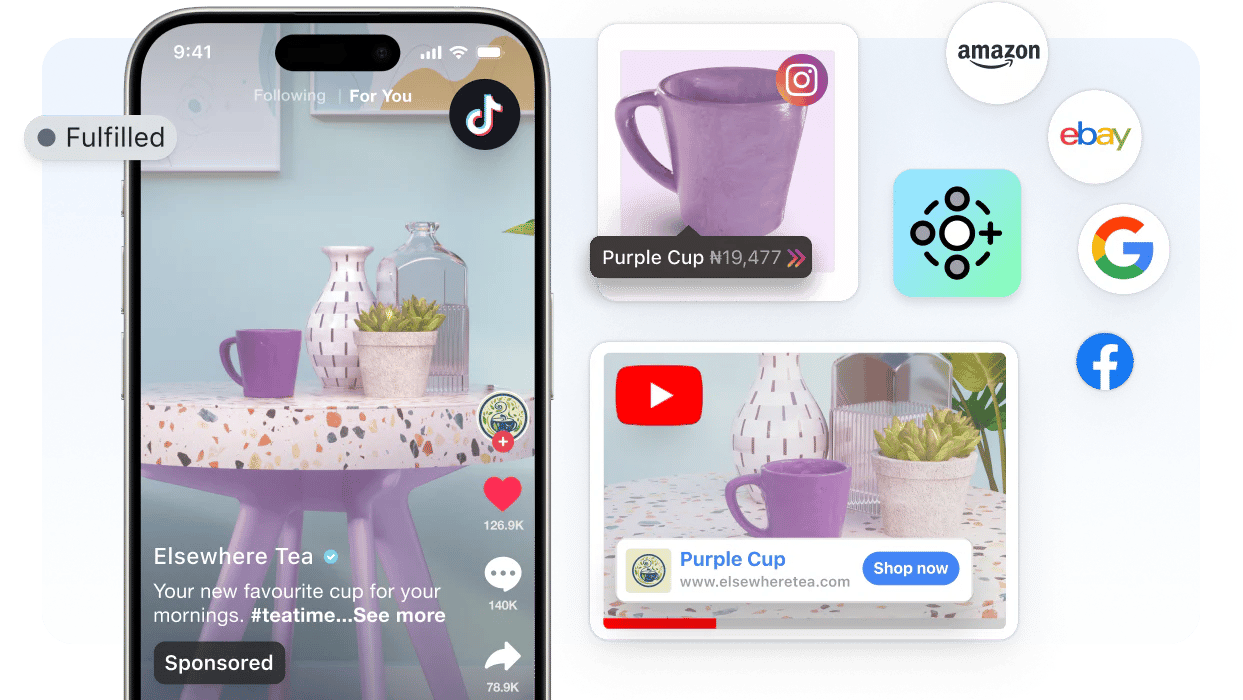
🛒 Sell Everywhere from One Place with Shopify Sales Channels.
From Instagram and Facebook to your blog, the Shop App, or even in-person — Shopify lets you manage all your sales channels in one dashboard.
Easily sync your product catalog, track orders, and engage customers across platforms like POS, Shopify Inbox, and your online store — no need to juggle tools or tabs.
Source: Digital Commerce 360
GrubMarket is expanding its GrubAssist AI platform with a new Monitoring AI Agent designed to help food ecommerce and supply chain businesses catch issues before they escalate.
The agent introduces always-on monitoring across operational and financial systems, shifting teams from reactive firefighting to proactive control.
Here are the deets ⬇️:
👀 Always-on monitoring: The Monitoring AI Agent runs passively in the background, continuously analyzing connected systems to detect anomalies, performance shifts, and emerging risks without manual reporting.
⚙️ Custom rules across core operations: Teams can define monitoring conditions across inventory levels, margin changes, customer ordering behavior, vendor performance, and accounts receivable. Alerts can be tailored to the metrics that matter most to each business.
🚨 Proactive alerts with context: When thresholds are crossed or unusual activity is detected, the agent sends email alerts with relevant supporting details, helping teams act quickly instead of digging through dashboards.
🔗 Deep system integrations: The agent integrates directly with ERP, ecommerce, and accounting platforms commonly used in food commerce, including WholesaleWare ERP, Produce Pro, Thyme Software, and QuickBooks.
📦 Automated operational workflows: Common use cases include low-stock warnings, expiring inventory alerts, margin erosion detection, customer inactivity monitoring, credit limit breaches, and supply shortage notifications.
Why it matters 🤨
This provides ecommerce operators the opportunity to always monitor operations and automatically surface risks before it's too late. As more commerce workflows become automated, having an edge will be based on how early businesses detect problems and how fast they respond.
🛎️ The Ecom Press Insider

Source: ChatGPT Image Generator
Ecom Fact: Premium video captures 140% more attention compared to scrolling social feeds, where users are more distracted and faster to move on. (Source: Lumen Research)
💡 Takeaway: If you’re investing in video, don’t judge performance by views alone. Use premium placements for moments that need focus, like product education, brand storytelling, or launch announcements, and let social handle fast discovery. Match the format to the level of attention your message actually needs.
🚀 Ecom strategies: How to ready your store for agentic commerce 🧠
AI agents aren’t just browsing anymore but they’re comparing, deciding, and transacting on behalf of customs. In preparation to ride the agentic wave, here are six ways to start preparing:
1. Make your store readable for AI agents 🧠: Move beyond classic SEO and focus on structured, machine-readable content. Use schema, clear attributes, and factual signals like delivery times, certifications, and pricing logic so agents can confidently pull your products into recommendations.
2. Build a simple brand agent 🤖: Create a lightweight brand assistant using no-code tools or custom GPTs to handle discovery, FAQs, and even checkout. This keeps your brand present when third-party agents try to abstract the buying journey away from you.
3. Plug into partner agent ecosystems 🤝: Don’t operate alone. Connect your catalog to agent-enabled marketplaces or partner networks so your products can be bundled, substituted, or recommended automatically when another brand is out of stock or complementary items are needed.
4. Design content for decision moments ⚡: Map the exact questions agents need to answer like budget limits, sustainability requirements, or delivery speed. Create focused content clusters that respond directly to those prompts so your store shows up at the moment decisions are made.
5. Test conversational ad placements 💬: Set aside a small budget to experiment with emerging ad formats inside AI-driven interfaces. Measure interaction quality and follow-up actions instead of clicks to understand how agents engage with paid prompts.
6. Prepare your backend for agent access 🔌: Standardize how inventory, pricing, and fulfillment data can be securely accessed by AI systems. This reduces friction when agents begin negotiating availability and delivery automatically.
⚡️Worthy Mentions
Wrapping up…
February is already setting the tone. We’re seeing a clear shift from talking about agentic systems to actually building and deploying them across commerce, marketing, and operations ⚙️📈.
The year is still young, but the direction is getting clearer by the week. We’ll keep breaking it down, one week at a time.
Subscribe if you haven’t already, and we’ll pick this up again next week 👋.